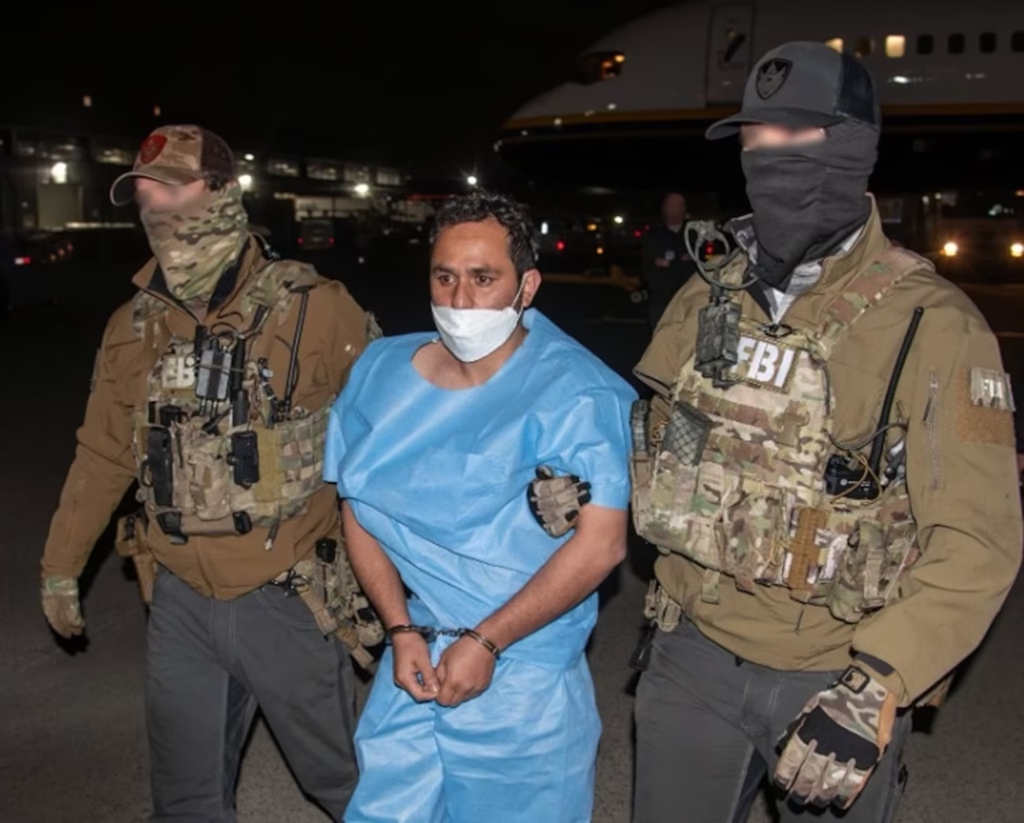
An Afghan national, Mohammad Sharifullah, has been sentenced to 20 years in prison by a US federal court for providing material support to the Islamic State’s Khorasan Province affiliate (ISIS-K). The case is linked to the August 2021 suicide bombing at Kabul’s Hamid Karzai International Airport, which killed 13 US service members and approximately 160 Afghan civilians.
A federal jury in Virginia convicted Sharifullah in April 2026 of participating in a conspiracy to provide material support to a designated foreign terrorist organization. However, jurors were unable to reach a unanimous decision on whether his conduct was responsible for the deaths in the Abbey Gate bombing. The sentencing therefore followed his conviction for supporting ISIS-K, rather than a jury finding that he was criminally responsible for the deaths in that specific attack.
US District Judge Anthony Trenga imposed the maximum 20-year prison sentence available for the conviction. The hearing included statements from relatives of US service members killed in the bombing, who described the lasting impact of their losses.
Evidence Presented in the Terrorism Case
According to prosecutors, Sharifullah had been involved in ISIS-K operations for several years before his arrest in 2025. Court evidence described his alleged participation in surveillance, the transportation of suicide bombers, the movement of weapons, and communications between members of the group.
Prosecutors said that on August 26, 2021, Sharifullah was tasked with checking a road leading to Kabul airport to determine whether it was clear of Taliban checkpoints. They alleged that he reported the route was clear before an ISIS-K operative carried out the suicide bombing at Abbey Gate.
The attack took place while US and allied forces were conducting an evacuation operation following the Taliban’s takeover of Afghanistan. Thousands of Afghans had gathered near the airport in an effort to leave the country.
Prosecutors also presented evidence concerning other attacks allegedly connected to Sharifullah, including a 2016 bombing targeting security personnel in Kabul and the March 2024 attack on Crocus City Hall near Moscow. They argued that his activities demonstrated a longstanding role in ISIS-K’s operations.
The jury found him guilty of conspiring to provide material support to ISIS-K but did not resolve whether the conspiracy legally resulted in the deaths at Abbey Gate. Had that additional finding been established, he could have faced a potential life sentence.
Defense Challenges Statements Made During Interrogation
Sharifullah’s defense team disputed the prosecution’s account of his role in the airport bombing. His lawyers argued that the government had not produced sufficient independent evidence connecting him directly to the attack beyond statements he made during questioning by US investigators.
The defense also challenged the reliability of those statements, arguing that Sharifullah may have been subjected to coercion while in Pakistani custody before being transferred to the United States. His lawyers raised concerns about possible mistreatment and pressure involving his family.
These arguments formed part of the defense’s challenge to the prosecution’s evidence. The jury ultimately convicted Sharifullah of the material-support conspiracy but did not reach a conclusion on whether that conspiracy was responsible for the Abbey Gate deaths.
Sharifullah did not testify at trial and declined to address the court before sentencing.
Families of Victims Describe Lasting Loss
The sentencing hearing included emotional statements from family members of the 13 US service members killed in the 2021 bombing. Several relatives asked the court to impose the maximum sentence, describing the enduring grief experienced by their families.
Mark Schmitz, the father of Marine Lance Corporal Jared Schmitz, addressed Sharifullah directly and said he forgave him for the role he believed he had played in his son’s death. He explained that he did not want to spend the rest of his life consumed by hatred.
Other family members described the loss of their children and the lasting consequences of the attack. Judge Trenga said the evidence showed Sharifullah had been involved in serious terrorist activity and expressed frustration that the court could impose no more than 20 years for the offense established by the jury’s verdict.
The statements reflected the continuing impact of the bombing on the families of those killed, as well as the legal limits of the sentence available following the jury’s findings.
Background: The 2021 Abbey Gate Bombing
The Abbey Gate bombing occurred on August 26, 2021, during the final stages of the US military withdrawal from Afghanistan. An ISIS-K suicide bomber detonated explosives near an entrance to Hamid Karzai International Airport, killing 13 US service members and approximately 160 Afghan civilians.
The attack was among the deadliest incidents during the evacuation, which saw large numbers of Afghans attempting to leave the country amid the Taliban’s return to power.
ISIS-K claimed responsibility for the bombing. Subsequent investigations examined the attacker’s identity, the circumstances surrounding the airport’s security, and the intelligence available to US forces before the explosion.
Sharifullah’s prosecution became a high-profile US terrorism case, but the jury’s inability to determine whether his conduct caused the deaths at Abbey Gate remains a central distinction in the legal outcome.
A Conviction With Defined Legal Limits
The 20-year sentence represents the maximum punishment for the material-support conspiracy conviction. It does not resolve the separate question on which the jury was unable to agree: whether Sharifullah’s conduct was legally responsible for the deaths in the Abbey Gate bombing.
The case illustrates the distinction between proving participation in a terrorist organization’s activities and establishing criminal responsibility for a particular mass-casualty attack. Although prosecutors presented evidence linking Sharifullah to ISIS-K operations and the planning environment surrounding the bombing, the jury’s verdict did not establish the additional death-related element necessary for a potential life sentence.
Source: ABC News, “Afghan Man Tied to Abbey Gate Bombing Sentenced to 20 Years for Supporting ISIS,” September 16, 2026. Additional background: US Department of Justice — Federal jury convicts ISIS-K terrorist in Abbey Gate case.
This article is based on published reporting and US Department of Justice information. Allegations presented by prosecutors and the defense are attributed accordingly. The jury’s unresolved finding concerning responsibility for the Abbey Gate deaths is distinguished from the conviction on the material-support conspiracy charge.