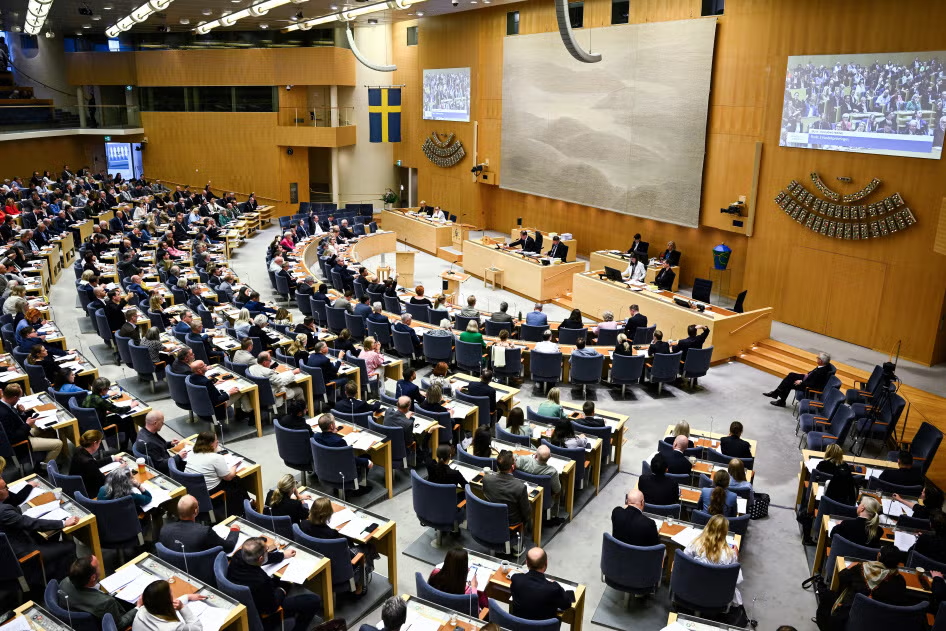
Human Rights Watch (HRW) has called on Sweden’s next government to strengthen its commitment to human rights, democracy, and international law, outlining ten policy priorities ahead of the country’s September 2026 parliamentary election.
In a commentary published on September 16, Måns Molander, HRW’s Nordic director, argued that Sweden should take a more consistent and active role in defending human rights internationally as democratic institutions face growing pressure, authoritarian governance expands, and violations of international law frequently go unpunished.
Sweden has traditionally presented human rights and respect for international law as central principles of its foreign policy. HRW warned, however, that these commitments require stronger and more consistent action in response to global conflicts, technological developments, and restrictions on fundamental freedoms.
A Clearer Strategy for Human Rights Policy
HRW’s first recommendation is for Sweden to adopt a comprehensive foreign policy strategy covering human rights, democracy, and the rule of law. The organization called for a clear vision accompanied by an action plan to guide Sweden’s international engagement.
The proposed strategy would help establish consistent priorities across diplomatic relations and international cooperation, rather than addressing human rights concerns selectively.
HRW also urged Sweden to strengthen protections for human rights in the digital environment. It called for regulatory frameworks to address risks associated with artificial intelligence and online platforms, greater support for digital rights organizations, and renewed government backing for the Stockholm Internet Forum as part of Sweden’s international policy priorities.
Regulating Emerging Weapons Technologies
Another priority concerns autonomous weapon systems, which can select and engage targets without meaningful human control. HRW urged Sweden to support an international agreement regulating these weapons before technological advances make effective safeguards more difficult to establish.
The organization also called for Sweden to expand its support for children’s rights, particularly the right to education. It encouraged the government to support international efforts to recognize free preschool and secondary education alongside the existing international guarantee of free primary education.
HRW further urged Sweden to remain a party to the Ottawa Convention, which prohibits anti-personnel landmines. The recommendation comes amid debate over whether Sweden should withdraw from the treaty. The organization argued that maintaining the prohibition is important given the continuing impact of landmines on civilians.
Supporting Human Rights Investigations Worldwide
HRW called on Sweden to restore and expand funding for international human rights monitoring and investigations. Although the organization recognized Sweden’s support for Ukraine, it argued that the country should maintain a broader global approach.
It highlighted reductions in Swedish support for human rights work in countries including Myanmar, Cambodia, Afghanistan, and Liberia. According to HRW, funding for local organizations and investigative initiatives can make a substantial difference in documenting abuses and supporting accountability.
The organization also encouraged Sweden to take a more active role at the United Nations Human Rights Council, including by leading initiatives addressing specific country situations where serious violations require international attention.
Protecting Older Persons and Strengthening Gender Equality
HRW urged Sweden to reconsider its opposition to a proposed international treaty on the rights of older persons. The organization argued that existing international human rights mechanisms do not adequately address all the challenges older people face and that a dedicated treaty could help strengthen protections.
Gender equality was another major priority. Sweden previously promoted a feminist foreign policy, but the government abandoned the formal designation and eliminated the ambassadorial role responsible for coordinating the policy in 2022.
HRW called on the next government to renew its leadership on women’s rights and gender equality, potentially by rejoining the group of countries pursuing an explicit feminist foreign policy. The organization said stronger international leadership is particularly important amid growing resistance to women’s rights in various parts of the world.
Greater Action on International Law and Gaza
HRW also called for Sweden to make fuller use of diplomatic and economic measures to respond to violations of international law. It urged the government to take a more active role within the European Union and the United Nations in addressing abuses by governments and other parties to armed conflicts.
The organization specifically called for measures addressing Israeli government violations of international law, alongside the evacuation of medical patients from Gaza who require urgent treatment and renewed support for the United Nations Relief and Works Agency for Palestine Refugees in the Near East (UNRWA).
HRW argued that Sweden should apply its international legal obligations consistently, regardless of the country or political actor involved.
Defending International Justice
The final priority concerns the protection of the rules-based international order and the independence of international judicial institutions, particularly the International Criminal Court (ICC).
HRW urged Sweden to encourage stronger collective action by the European Union in response to United States sanctions targeting ICC personnel. It specifically recommended that the EU consider activating its Blocking Statute and developing additional measures to protect the court from external pressure.
The organization also called on Sweden to place international justice more firmly at the center of its foreign policy, build international support for the ICC, and encourage additional countries to join the court.
A Test for Sweden’s International Leadership
HRW’s ten recommendations cover a broad range of issues, from digital rights and emerging weapons technologies to gender equality, humanitarian assistance, and international criminal justice.
The organization’s central argument is that Sweden should translate its longstanding commitment to human rights into more consistent diplomatic action, sustained financial support for independent monitoring, and stronger engagement with international institutions.
As the next government takes shape, the recommendations provide a framework for assessing how Sweden approaches its international responsibilities and responds to violations of human rights and international law.
Source: Human Rights Watch, “A Human Rights Agenda for the Next Swedish Government,” September 16, 2026, commentary by Måns Molander, Nordic Director.
This article summarizes recommendations made by Human Rights Watch. The policy proposals and assessments are attributed to the organization and should not be interpreted as adopted positions of the Swedish government.